
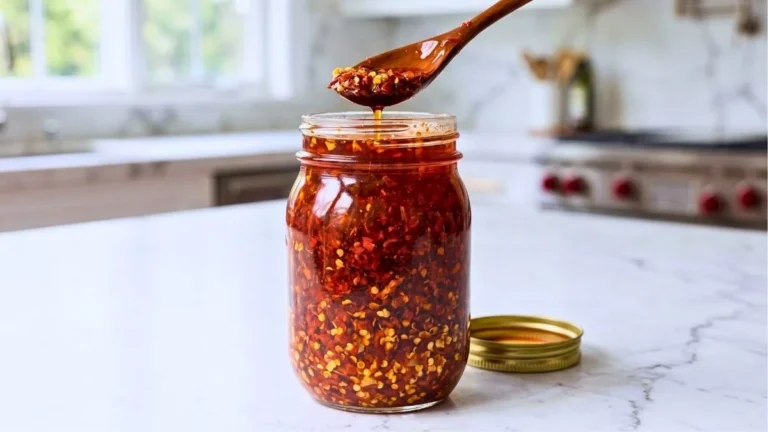

I’ve ordered xiao long bao at Din Tai Fung more times than I can count. Every single time, the first thing I reach for is that little dish of chili oil.
It’s not just heat. It’s fragrant, slightly sweet, with a gentle numbing edge from Sichuan peppercorns and a clean garlic-ginger backbone that somehow never overpowers the dumplings.
The restaurant version is made fresh daily and isn’t widely sold bottled, which means the only way to have it on demand is to make it yourself.
After testing multiple batches and comparing notes from visits in different cities, this version gets closest to the balanced, aromatic oil they serve tableside.
Why Make This Chili Oil at Home Instead of Buying a Bottle
Most store-bought chili oils lean either too one-note spicy or too heavy on preserved ingredients. At home you control the oil temperature, the freshness of the garlic, and the exact balance of heat to aroma.
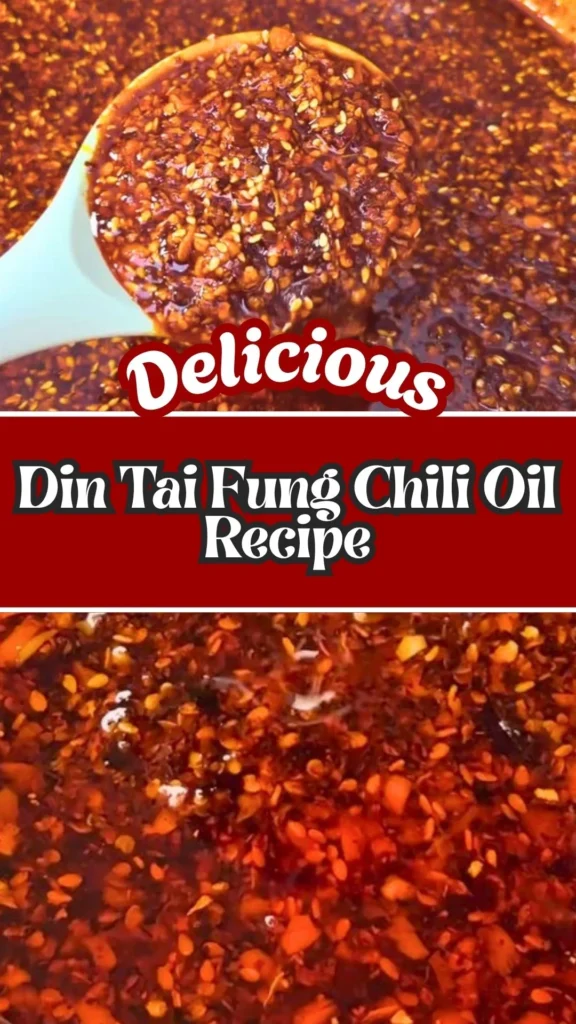
Restaurant oil is poured hot over the spices the day it’s served. Yours can be the same. You also avoid the inconsistency of commercial jars. Some are mostly oil with sparse flakes.
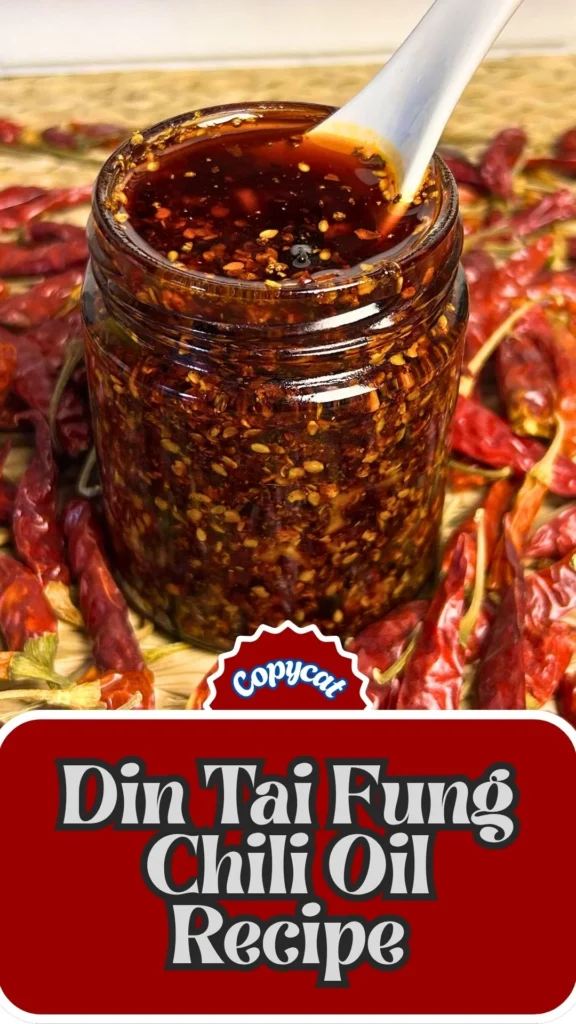
This one is dense with chili and aromatics, the way it arrives at the table when the server places it next to your black vinegar and soy.
What Makes Din Tai Fung-Style Chili Oil Different
Many Chinese chili oils are pure heat or heavy on Sichuan peppercorn numbing. Din Tai Fung’s version is more fragrant than fiery. It carries garlic, ginger, a hint of sweetness, and just enough Sichuan peppercorn for a subtle tingle rather than a full ma-la punch.
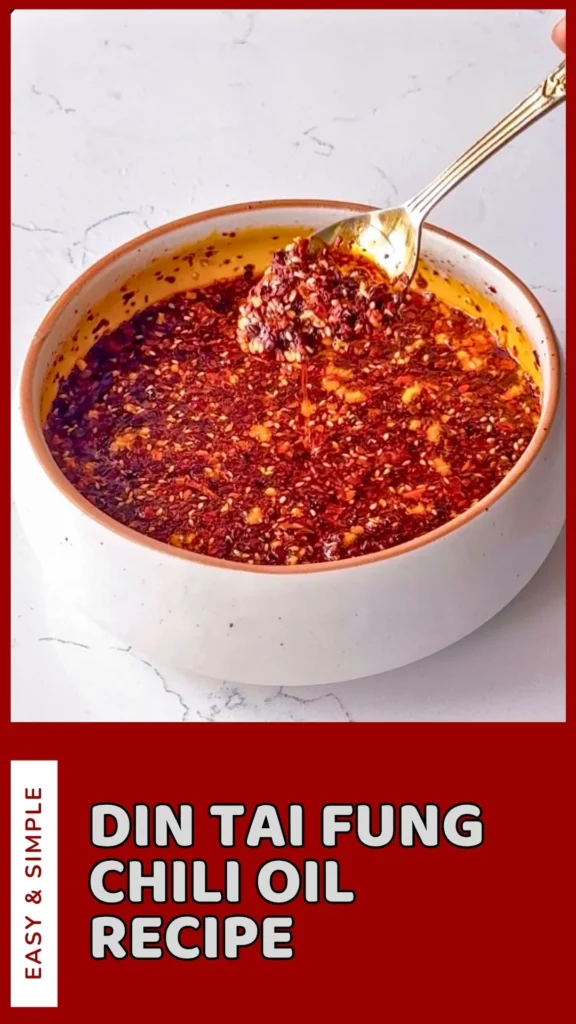
The color is deep red but not murky, and the oil stays pourable instead of turning into a thick crisp. This recipe copies that lighter, aromatic style rather than a heavy chili crisp.
Ingredients for Din Tai Fung Chili Oil
1 cup neutral oil (grapeseed, canola, or refined peanut oil): This is the carrier. A neutral oil lets the aromatics and chilies shine without adding its own flavor. Avoid extra-virgin olive oil-it burns and tastes wrong here.
½ cup Chinese chili flakes (medium grind, preferably Facing Heaven or Tien Tsin style): These provide the classic bright red color and clean heat. Look for flakes that still have some seeds and skin, not pure powder.
¼ cup gochugaru (Korean chili flakes, coarse): This softens the heat and adds a mild sweetness and vibrant color that pure Chinese flakes alone don’t give. It is one of the quiet secrets to the balanced restaurant-style oil.
3 tablespoons minced garlic (about 8–9 cloves): Fresh garlic is non-negotiable. Pre-minced jarred garlic tastes flat once it hits hot oil.
1 tablespoon minced ginger: Fresh ginger adds a clean, sharp lift that keeps the oil from tasting heavy.
2 tablespoons thinly sliced scallion whites: These infuse a mild onion sweetness during the oil heating step.
1 teaspoon whole Sichuan peppercorns: Toast them lightly for fragrance. You want a subtle tingle, not a full numbing blast.
1 small star anise: Adds a gentle licorice note that shows up in the background of the restaurant oil.
1-teaspoon sugar: Just enough to round the heat and echo the slight sweetness in the original.
1 tablespoon light soy sauce: Adds umami depth and a touch of color once the oil cools slightly.
½ teaspoon fine salt: Seasons the flakes so the oil doesn’t taste flat.
1 teaspoon Chinese black vinegar or rice vinegar (optional but recommended): A tiny splash brightens the finish the way the restaurant condiment does when mixed at the table.
1 teaspoon toasted sesame oil (optional): For a soft nutty edge. Add at the very end so it doesn’t cook away.
Kitchen Tools That Make This Easier
- Small saucepan or wok
- Heatproof bowl (glass or ceramic)
- Fine-mesh strainer
- Thermometer (helpful but not required)
- Clean glass jar with tight lid
How to Make Din Tai Fung Chili Oil
1. Prepare the chili base
In a heatproof bowl, combine the Chinese chili flakes, gochugaru, sugar, and salt. Mix well and set aside. This is what the hot oil will bloom.
2. Infuse the oil
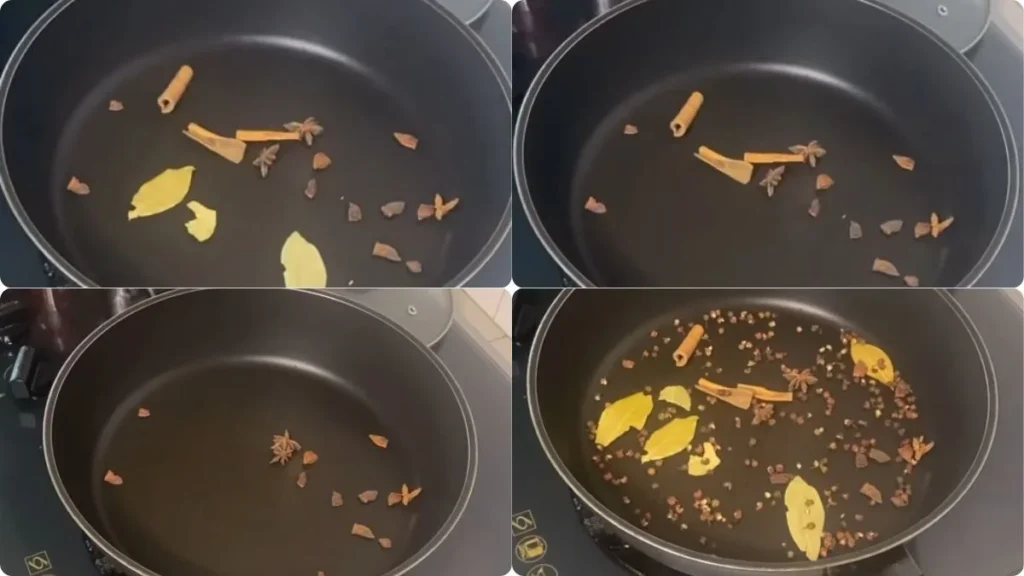
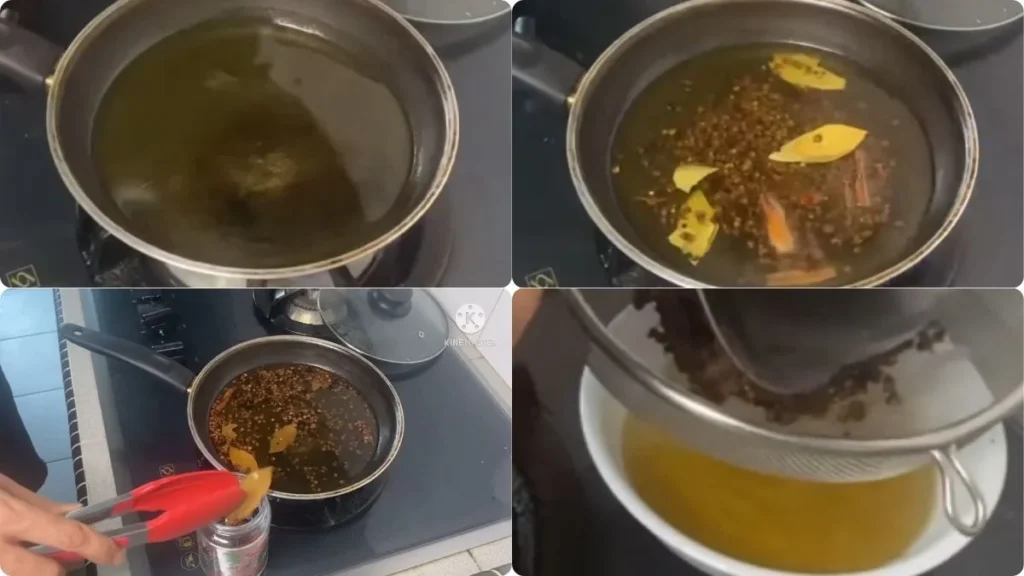
Pour the neutral oil into a small saucepan. Add the minced garlic, minced ginger, sliced scallion whites, Sichuan peppercorns, and star anise. Set over medium-low heat.
You want a gentle sizzle, not a hard boil. The garlic should slowly turn golden (not brown) and the kitchen should fill with a clean garlic-ginger aroma. This usually takes 8–12 minutes. Stir occasionally so nothing sticks. If the garlic starts to darken too fast, lower the heat immediately.
3. Strain and temperature check
Once the garlic is light golden and the scallions look soft, remove the pan from heat. Strain the oil through a fine-mesh strainer into a clean heatproof bowl or back into the pot, discarding the solids. The oil should still be hot-around 250–280°F (120–140°C) is ideal. If it has cooled too much, reheat briefly.
4. Bloom the chilies
Carefully pour about three-quarters of the hot oil over the chili flake mixture in a thin stream while stirring. You should hear a lively sizzle and see the flakes darken and release their color into the oil. Let it settle for 30 seconds, then pour the remaining oil over the top. Stir thoroughly.
5. Finish the oil
Once the mixture stops bubbling aggressively, stir in the light soy sauce and the optional black vinegar. If using sesame oil, add it now. Taste (carefully-it is still hot) and adjust salt or sugar if needed. The oil should taste fragrant first, then gently spicy, with a clean finish.
6. Cool and rest
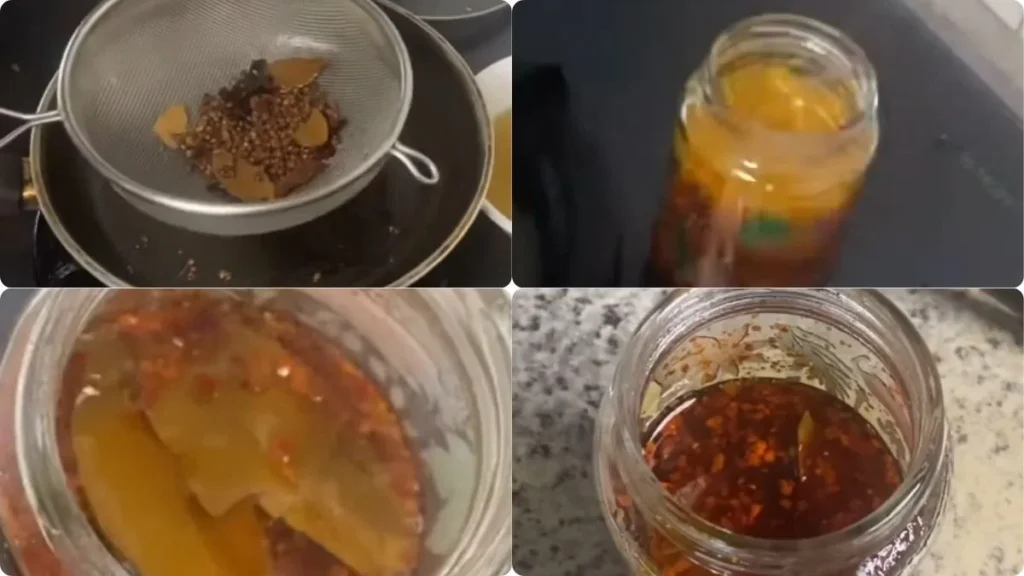
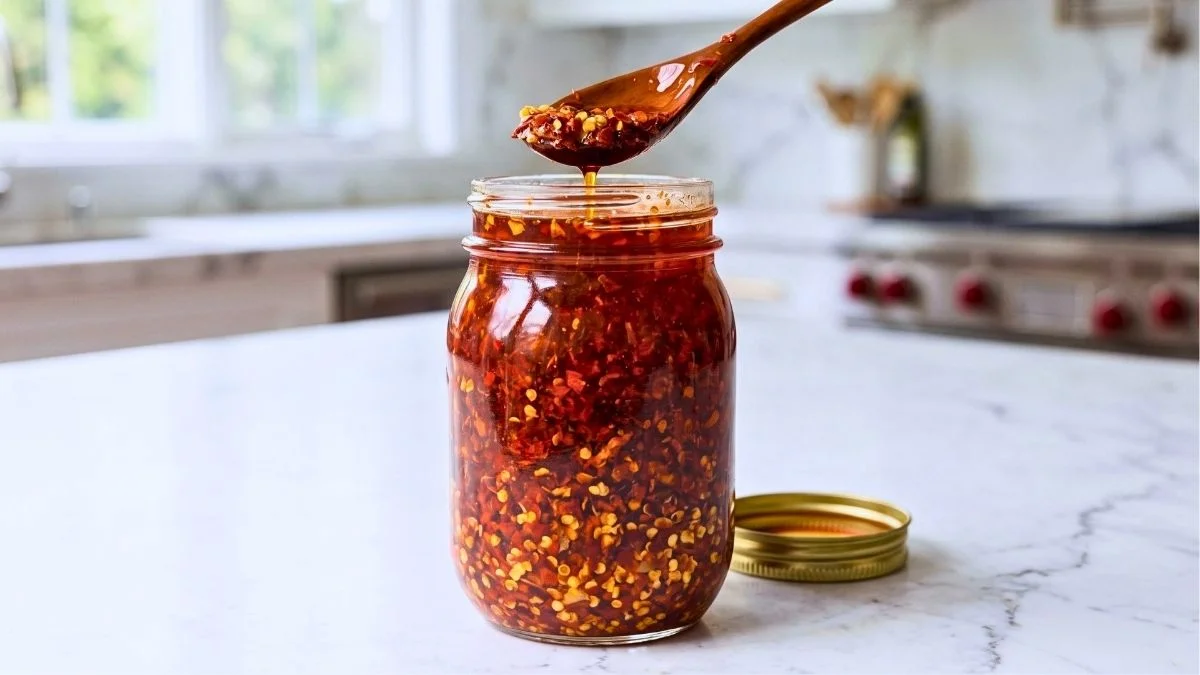
Let the chili oil cool completely to room temperature, uncovered. Transfer to a clean glass jar. The flavor improves after 12–24 hours as the spices settle.
Chef Notes and Troubleshooting
Oil tastes bitter: The garlic or scallions got too brown. Next time keep the heat lower and pull them sooner.
Not red enough: Use a higher ratio of gochugaru or add a teaspoon of ground chili powder with the flakes.
Too spicy: Reduce the Chinese chili flakes next batch and increase the gochugaru. The restaurant version is moderate, not aggressive.
Oil separates and looks thin: This is normal. Stir before each use. The flakes will settle over time.
Garlic flavor disappears: You may have cooked the garlic too long or used old garlic. Fresh minced garlic is key.
Variations I’ve Tried
- Milder version: Cut Chinese chili flakes to ⅓ cup and increase gochugaru to ⅓ cup.
- Extra fragrant: Add a small piece of cinnamon stick or a bay leaf during the oil infusion, then remove with the other solids.
- Chunkier chili crisp style: Leave some of the fried garlic and scallion in the finished oil instead of straining everything out.
- Nutty version: Toast 1 tablespoon sesame seeds and stir them into the chili base before pouring the oil.
What to Serve With Din Tai Fung Chili Oil
This oil is made for xiao long bao, spicy wontons, cucumber salad, cold noodles, and simple steamed rice. A spoonful over scrambled eggs or avocado toast is also excellent. At the table, most people mix a little black vinegar and soy sauce with a spoonful of the chili oil for dipping.
More Sauces to Try
If you love bold, spicy, and flavorful sauces, try these recipes next:
-
Taco Bell Lava Sauce Recipe – A creamy, spicy sauce that’s perfect for tacos, burritos, and dipping.
-
Jersey Mike’s Pepper Relish Recipe – A sweet-and-spicy pepper relish that adds plenty of flavor to sandwiches and burgers.
-
Aurelio’s Pizza Sauce Recipe – A classic pizza sauce recipe that’s great for homemade pizzas and dipping.
How to Store Din Tai Fung Chili Oil
Store in a clean glass jar in the refrigerator. It keeps well for 3–4 weeks. The oil may solidify slightly when cold-let it sit at room temperature for 10–15 minutes or run the jar under warm water before using. Always use a clean, dry spoon to avoid introducing moisture.
Freezing is not recommended. The texture of the flakes changes and the aromatics dull.
Din Tai Fung Chili Oil Recipe
Ingredients
Method
- In a heatproof bowl, combine the Chinese chili flakes, gochugaru, sugar, and salt. Mix well and set aside. This is what the hot oil will bloom.
- Pour the neutral oil into a small saucepan. Add the minced garlic, minced ginger, sliced scallion whites, Sichuan peppercorns, and star anise. Set over medium-low heat.
- You want a gentle sizzle, not a hard boil. The garlic should slowly turn golden (not brown) and the kitchen should fill with a clean garlic-ginger aroma. This usually takes 8–12 minutes. Stir occasionally so nothing sticks. If the garlic starts to darken too fast, lower the heat immediately.
- Once the garlic is light golden and the scallions look soft, remove the pan from heat. Strain the oil through a fine-mesh strainer into a clean heatproof bowl or back into the pot, discarding the solids. The oil should still be hot-around 250–280°F (120–140°C) is ideal. If it has cooled too much, reheat briefly.
- Carefully pour about three-quarters of the hot oil over the chili flake mixture in a thin stream while stirring. You should hear a lively sizzle and see the flakes darken and release their color into the oil. Let it settle for 30 seconds, then pour the remaining oil over the top. Stir thoroughly.
- Once the mixture stops bubbling aggressively, stir in the light soy sauce and the optional black vinegar. If using sesame oil, add it now. Taste (carefully-it is still hot) and adjust salt or sugar if needed. The oil should taste fragrant first, then gently spicy, with a clean finish.
- Let the chili oil cool completely to room temperature, uncovered. Transfer to a clean glass jar. The flavor improves after 12–24 hours as the spices settle.
Video
Notes
Din Tai Fung Chili Oil FAQs
1. Can I use regular red pepper flakes?
Yes, but the flavor will be sharper and less rounded. Chinese chili flakes plus gochugaru give the closest color and balance.
2. Is this the exact restaurant recipe?
No one outside the company has the official formula. This is a carefully tested copycat based on multiple tastings and common professional techniques that reproduce the aromatic, moderately spicy profile.
3. How spicy is it?
Medium. It has noticeable heat but stays food-friendly so you can still taste the dumplings. Adjust the chili ratio to your preference.
4. Can I make a bigger batch?
Yes. Double everything and use a larger pot. The infusion time stays roughly the same.
5. Why add soy sauce at the end?
Adding it after the oil cools slightly preserves its fresh umami instead of cooking it away.
6. Do I need Sichuan peppercorns?
They add the subtle tingle that makes the oil taste more like the restaurant version. You can omit them for a simpler garlic-chili oil, but the character changes.
7. Can kids eat this?
In small amounts, yes, if you reduce the chili flakes. The garlic and soy make it flavorful even when milder.
This Din Tai Fung Chili Oil Recipe comes down to three things: controlled oil temperature, fresh aromatics, and the right mix of chili flakes. Get those right and you will have a jar that disappears faster than the dumplings.
Drop a comment on the blog with your feedback-I can’t wait to hear what you think. Also, follow along on Pinterest, Facebook and YouTube for more tasty updates. Your support and thoughts mean the world!
Tastes exactly like the restaurant version, absolutely spot on